
Nutrition & Weight Management Guide
Fiber-Rich Foods That Keep You Full Longer
A plain-language look at how fiber influences fullness and which everyday foods are the best sources.
Fiber-rich foods that keep you full longer are among the most practical tools for anyone trying to manage appetite without relying on strict rules or tiny portions. Fiber is the part of plant foods that the body cannot fully digest, and because it travels through the digestive tract largely intact, it can add bulk, slow the pace of digestion, and influence the hormones and signals that tell the brain a meal has been enough. Not every high-fiber food works in the same way, however, and the science of satiety is more nuanced than a simple “eat more fiber” slogan. This article explains how fiber contributes to fullness, which food groups are reliable sources, and how to build meals around them comfortably.
How Fiber Supports Fullness and Satiety

Satiety is the feeling of fullness that lingers after eating and delays the return of hunger. Several factors shape it, including the volume of a meal, its protein content, how much chewing it requires, and how quickly the stomach empties. Fiber can affect several of these at once. Because it is not broken down into absorbable sugars the way starch is, fiber adds physical volume to food without adding a comparable number of digestible calories. Foods that are high in fiber also tend to be minimally processed, which usually means they take longer to chew and eat.
Certain types of fiber also absorb water and thicken the contents of the stomach and small intestine. This thickening is generally described as viscosity, and it can slow gastric emptying and the absorption of nutrients such as glucose. A slower, steadier release of nutrients is one reason high-fiber meals are often associated with more stable blood sugar after eating. Researchers have also studied how fermentation of some fibers by gut bacteria produces short-chain fatty acids, which may play a role in appetite-related signaling, although this area of research is still developing and its practical effect on fullness in everyday life is not fully settled.
It is worth stating plainly that the evidence is mixed. Fiber from whole foods tends to look more convincing for fullness than isolated fiber supplements, and the effect depends heavily on the type of fiber, the food it comes in, and the person eating it. Fiber is best understood as one helpful ingredient in a satisfying meal rather than a guaranteed appetite switch.
Soluble and Insoluble Fiber: Why the Difference Matters for Appetite
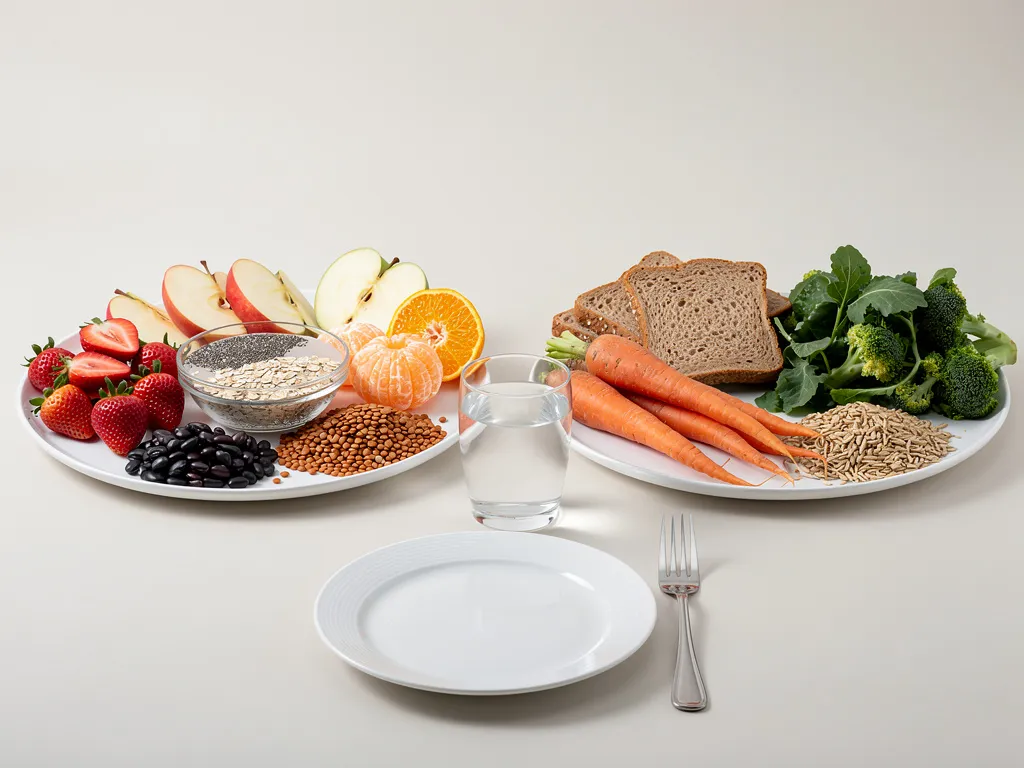
Dietary fiber is commonly divided into two broad categories. Soluble fiber dissolves in water and forms a gel-like substance in the digestive tract. Insoluble fiber does not dissolve and mainly adds bulk, helping food move through the intestines. Most plant foods contain a mixture of both, though the proportions vary.
Soluble, viscous fibers are the ones most often linked to slower digestion and prolonged fullness. Beta-glucan in oats and barley, pectin in many fruits, and the gel-forming fibers in beans, chia seeds, and flaxseed are common examples. Insoluble fiber, found in wheat bran, the skins of many vegetables, and whole grains, contributes more to bulk and regularity, and it can still make meals feel more substantial. Since each type does something different, variety matters more than focusing on any single source.
Context box
Health agencies in many countries note that a large share of adults eat less fiber than recommended. Because individual targets differ by age and sex, it is sensible to check the guidance published by your national health authority or to ask a registered dietitian what is appropriate for you.
Legumes: Beans, Lentils, and Chickpeas as High-Fiber Staples
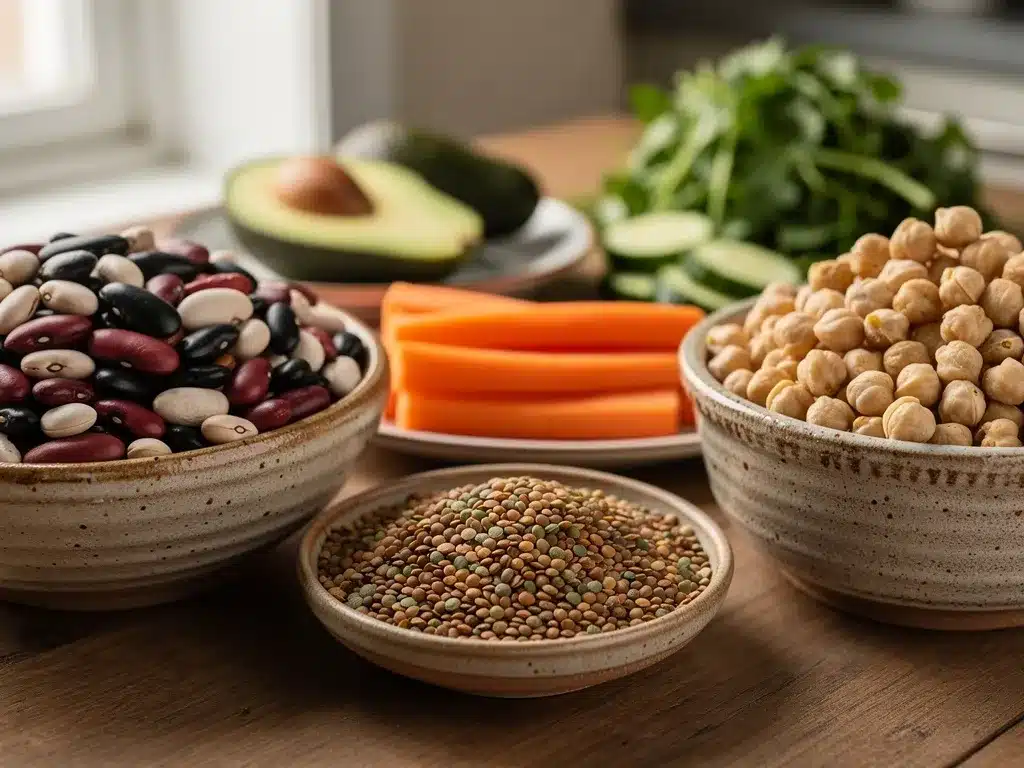
Legumes are frequently named among the most filling plant foods, and the reason is straightforward. They combine substantial fiber with plant protein and slowly digested carbohydrates, a pairing that tends to make a meal feel more lasting. Black beans, kidney beans, lentils, split peas, and chickpeas are all well-established sources, and they work in soups, salads, grain bowls, stews, and spreads such as hummus.
Legumes also contain resistant starch, a type of carbohydrate that resists digestion in the small intestine and is fermented in the large intestine. Some people notice gas when they first add legumes to their diet, since fermentation by gut bacteria produces it. Rinsing canned beans, soaking dried ones, and increasing portions gradually are common ways to ease the adjustment. Canned and dried varieties are both nutritionally useful, and choosing low-sodium canned options or draining and rinsing them can help limit added salt.
Whole Grains: Oats, Barley, and Other Fiber-Rich Carbohydrates
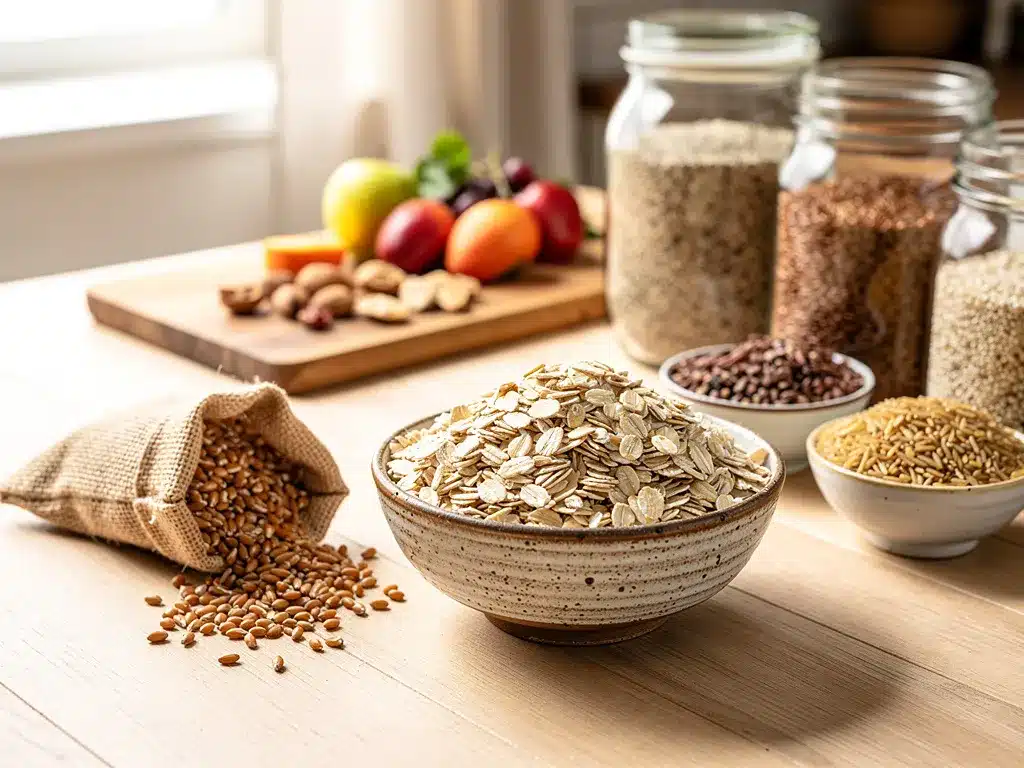
Whole grains keep the bran and germ that refined grains lose in processing, and that is where much of the fiber is found. Oats are a frequent breakfast choice because they contain beta-glucan, a soluble fiber studied for its effects on cholesterol and blood sugar and often discussed in relation to fullness. Barley is another notable source of beta-glucan, and it works well in soups and as a rice substitute. Other whole-grain options include brown rice, quinoa, bulgur, farro, whole-wheat bread and pasta, and popcorn, which is a whole grain when prepared without heavy additions of butter and salt.
Texture and preparation make a difference. Steel-cut or rolled oats are less processed than instant varieties and typically digest more slowly. Choosing bread and cereal labeled whole grain, and checking the ingredient list to see that a whole grain is listed first, helps separate truly whole-grain products from those that are only colored brown.
Fruits and Vegetables With the Most Filling Fiber
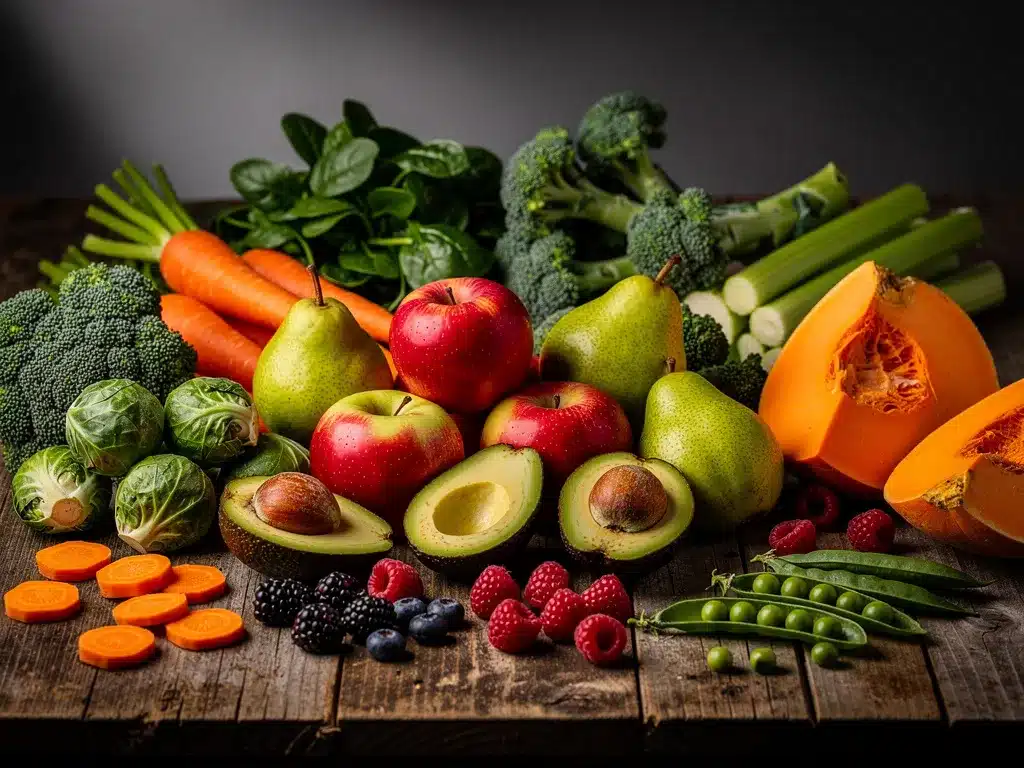
Whole fruits and vegetables supply fiber along with water, which adds volume at a modest calorie cost. Pears and apples, especially when eaten with the skin, provide pectin and other fibers. Berries such as raspberries and blackberries are often cited as particularly fiber-dense among fruits. Avocados are unusual for combining fiber with healthy fats, which can also contribute to a lasting sense of fullness.
Among vegetables, broccoli, Brussels sprouts, carrots, artichokes, leafy greens, and sweet potatoes with their skins are all considered good fiber sources. Eating the whole food matters. Fruit juice, even when it is made from fiber-rich fruit, generally contains little of the original fiber, and it is much easier to drink quickly than a whole piece of fruit is to eat. That difference in chewing time and bulk is one reason whole fruit is generally considered more satisfying than juice.